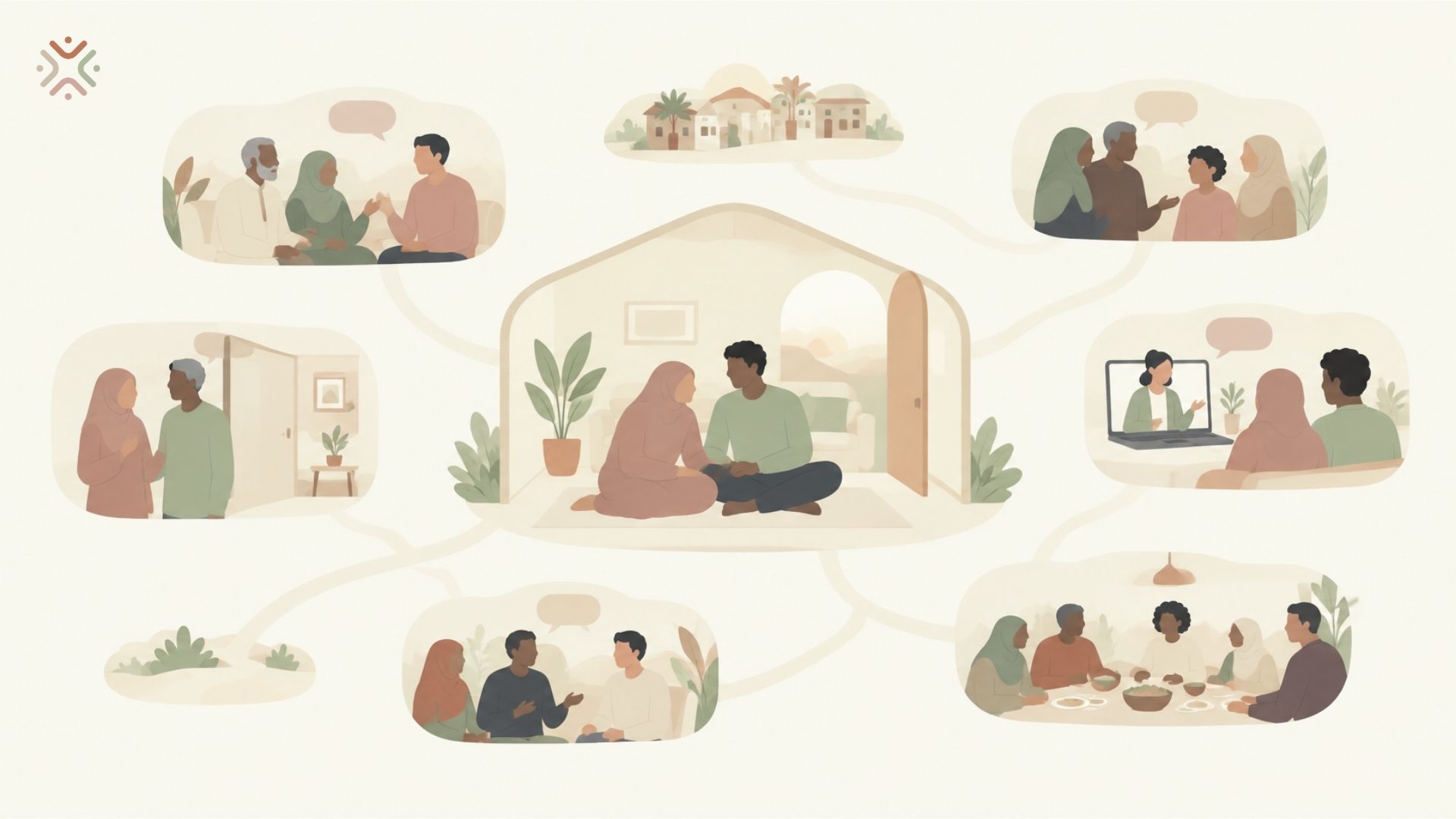
Culturally responsive therapy

Your background may shape what you want from therapy. It should not become a set of assumptions about you.

Culture, language, race, migration, family, faith (or no faith), may be central to your concerns, relevant in some situations, or unrelated to what brings you to therapy. Culturally responsive therapy makes room for these experiences without making assumptions about you.

Thera connects you with independent therapists. Explore profiles and ask about the experience, approach and languages that matter to you.

What culturally responsive therapy means

Culturally responsive therapy describes how care is approached, rather than one particular method. It combines appropriate clinical skills with attention to your cultural and social context. Your therapist should explore your needs, explain options and consider adaptations with you, not assume they understand you because of your background.

In practice, your therapist should:

  • Ask how you understand your concerns and what you want help with.
  • Take experiences of racism and discrimination seriously.
  • Explore what family, community, faith (or having no faith) mean to you, without assuming they are either problems or sources of support.
  • Discuss how language, communication and preferences may affect your sessions.
  • Recognise their own assumptions and be willing to discuss misunderstandings.

Ask prospective therapists how they put these principles into practice and what experience they have with the concerns you want help with. You may prefer a therapist who shares part of your background, or someone outside your community. Either preference is valid. Shared identity alone does not establish relevant clinical expertise or guarantee that therapy will be helpful.

What you might bring to therapy

These are possible topics, not a description of everyone from a particular background. You can also seek help with concerns unrelated to culture or identity.

Work and pressure to succeed

Code-switching, discrimination, self-doubt, pressure to prove yourself, or exhaustion from feeling you must continually adapt. Therapy can make space for your responses without overlooking the environment around you.

Related reading: Code-switching at work: the emotional cost for BIPOC professionals · Imposter syndrome in BIPOC professionals: when success still feels unsafe · Workplace microaggressions and mental health: online therapy for people of colour · Racial stress at work: online therapy for BIPOC professionals

Family and expectations

Responsibilities, boundaries, marriage expectations, or different views about mental health. Your therapist should explore what matters to you without assuming that family closeness is a problem or separation is the goal.

Related reading: When your parents don’t understand mental health: how young BIPOC adults can start difficult conversations · Family expectations and personal boundaries: finding balance without losing respect · The high-achieving child of immigrants: success, guilt and emotional exhaustion · Marriage pressure: family expectations and relationship support in BIPOC communities

Identity and belonging

Migration, mixed heritage, generational differences, or feeling connected to more than one culture. You may want to explore belonging, exclusion or changes in how you understand yourself.

Related reading: Caught between two cultures: online therapy for people navigating identity and belonging · Finding belonging as a BIPOC client: identity, community and emotional support · Mental health for second-generation and BIPOC communities in Europe

Anxiety, low mood, grief and difficult experiences

You may want support with worry, depression, loss or distress connected with racism. You do not need to diagnose yourself before asking for help. Assessment should explore your individual difficulties, circumstances and support needs.

Related reading: When anxiety feels like overthinking: understanding worry in BIPOC daily life · Trauma therapy for BIPOC communities: from migration, family violence and racial trauma to emotional safety · Infertility and pregnancy loss and silent grief: online therapy for BIPOC couples and families

These articles provide general information, not an individual assessment or diagnosis.

Therapy in a language that works for you

You may prefer your first language, another language, or moving between languages during sessions.

Check individual profiles for current availability and ask whether the therapist provides therapy in your preferred language. Speaking the same language does not necessarily mean sharing the same cultural experience.

How to find the right therapist

Browse therapist profiles to review qualifications, relevant experience, languages, fees and availability. Background information is one consideration, not evidence of specialist expertise. Ask about the priorities that matter to you, such as experience with migration, racism, faith or particular family dynamics, and share only what you are comfortable including in an initial enquiry. Discuss how the therapist works, how they respond to cultural differences and whether they can provide online care where you are located. As therapy progresses, you can give feedback, ask for a different approach or explore changing therapists; ask about the process, any costs and how a transition would be managed. Before booking, find out more about fees, cancellation, rescheduling and refund terms on our pricing page.

Privacy, safety and online sessions

Before therapy starts, your therapist should explain confidentiality and its limits, how records are handled, and arrangements for contact between sessions. Information may sometimes need to be shared because of safeguarding concerns, serious risks of harm or legal requirements. The applicable rules depend on the practitioner and relevant law.

Consider whether someone could overhear you or access your device or appointment notifications. If someone monitors your communications, avoid changes that could increase your risk. Consider contacting a specialist abuse-support service through a safer device or contact method, if available.

Online therapy is not suitable for every situation. Your therapist should assess whether they can meet your needs and discuss other services where appropriate. Before starting, agree what happens if the connection fails or urgent help is needed, including how your location and local emergency support will be identified. Emergency planning is an important part of remote mental healthcare.

Questions about culturally-responsive therapy

Choosing a therapist, discussing your background, and understanding confidentiality and support options.

Is this only for BIPOC clients or people who have migrated?

No. This page is for anyone who wants their cultural context considered in therapy. You do not need a particular identity label, migration history or concern to explore these questions.

Can I choose a therapist who shares my background?

You can express that preference and review information therapists have chosen to share. A name, photograph, language or country of background should not be treated as evidence of racial or ethnic identity. Ask about relevant experience as well as any background or identity preferences that matter to you.

Will my therapist understand racism or discrimination?

Ask about their relevant experience and how they approach these conversations. No profile or matching process can guarantee understanding.

If you feel dismissed, you can raise the concern if comfortable, seek another therapist, or raise a complaint with our team. You do not have to raise a concern directly with the therapist before seeking advice or making a complaint.

Do I have to discuss culture, race or faith?

No. You choose what you want to bring to therapy. Your therapist may ask about your wider circumstances, but should explain why and avoid treating your background as the automatic explanation for your difficulties.

Will my family be told?

Your therapist should explain whether anyone else may receive information about your care, on what basis, and whether your consent is needed. Ask about any exceptions involving safeguarding, serious risks of harm or legal requirements.

What if I need urgent help?

Do not wait for an appointment or website reply if you are in immediate danger, have seriously harmed yourself, or think you may act on thoughts of harming yourself or someone else. Contact emergency services where you are, or go to the nearest emergency department if you can do so safely. For urgent support without immediate danger, contact a local crisis or urgent mental health service. If possible and safe, ask someone you trust to help you access support. Alternatively, consult our emergency resources page. 

Browse our therapist directory

Any
Any
Any
Any
Any
Any
Any
Any
Sort by:
Alvaro  Fernandez Cencerrado

Alvaro Fernandez Cencerrado

Licensed Clinical Psychologist

Languages: English Spanish
80.00 USD / 45 min
Experience: 5+ years
Next available: Wed, Nov 11
Europe Helps set and work toward goals Teaches tools and techniques

Specialisations

Trauma and Post-Traumatic Stress Disorder (PTSD) Anxiety & Stress Depression Couples Therapy Teen Therapy +6

Rehana  Meghani

Rehana Meghani

Accredited Clinical Psychologist

Language: English
145.00 USD / 45 min
Experience: 5+ years
Next available: Wed, Nov 11
South Asia Is a good listener Helps set and work toward goals

Specialisations

Trauma and Post-Traumatic Stress Disorder (PTSD) Couples Therapy Depression Anxiety & Stress Relationships (family, friends etc) +1
Analia Trujillo

Analia Trujillo

Psicóloga Licenciada

Language: Spanish
50.00 USD / 45 min
Experience: 1 to 3 years
Next available: Thu, Nov 12
Latin America & Caribbean Is a good listener Helps set and work toward goals Teaches tools and techniques

Specialisations

Anxiety & Stress Depression Social Anxiety Relationships (family, friends etc) Sleep Disturbances +4
Laura Jimenez Martinez

Laura Jimenez Martinez

Licensed Psychologist

Languages: English Spanish
80.00 USD / 45 min
Experience: 5+ years
Next available: Fri, Nov 13
Europe Is a good listener Helps set and work toward goals Teaches tools and techniques

Specialisations

Anxiety & Stress Depression Couples Therapy Social Anxiety Relationships (family, friends etc) +3
Alessandra Sacchetti

Alessandra Sacchetti

Licensed Clinical Psychologist

Languages: English Italian Spanish
85.00 USD / 45 min
Experience: 5+ years
Next available: Wed, Nov 11
Europe Challenges beliefs and patterns Checks in regularly Explores the past

Specialisations

Trauma and Post-Traumatic Stress Disorder (PTSD) Depression Anxiety & Stress Relationships (family, friends etc) Social Anxiety +3
Sabari Vaishnavi  Harigobi

Sabari Vaishnavi Harigobi

Licensed Clinical Psychologist & Neuropsychologist

Languages: English Tamil
140.00 USD / 45 min
Experience: 5+ years
Next available: Wed, Nov 11
South Asia Explores the past Helps set and work toward goals Teaches tools and techniques

Specialisations

Anxiety & Stress Depression Anger Management Social Anxiety Sleep Disturbances +1

Need help choosing a therapist?

Tell us what you’re looking for. Our matching team can help you explore your options.

Get help choosing

Explore our articles

For Immediate Help

Thera is a technology platform that connects clients with independent mental health professionals. We do not provide emergency care or crisis intervention. In immediate danger or crisis, contact local emergency services, or visit these resources.